
Signs Your Male Cat Has a Urinary Blockage & Why It’s an Emergency
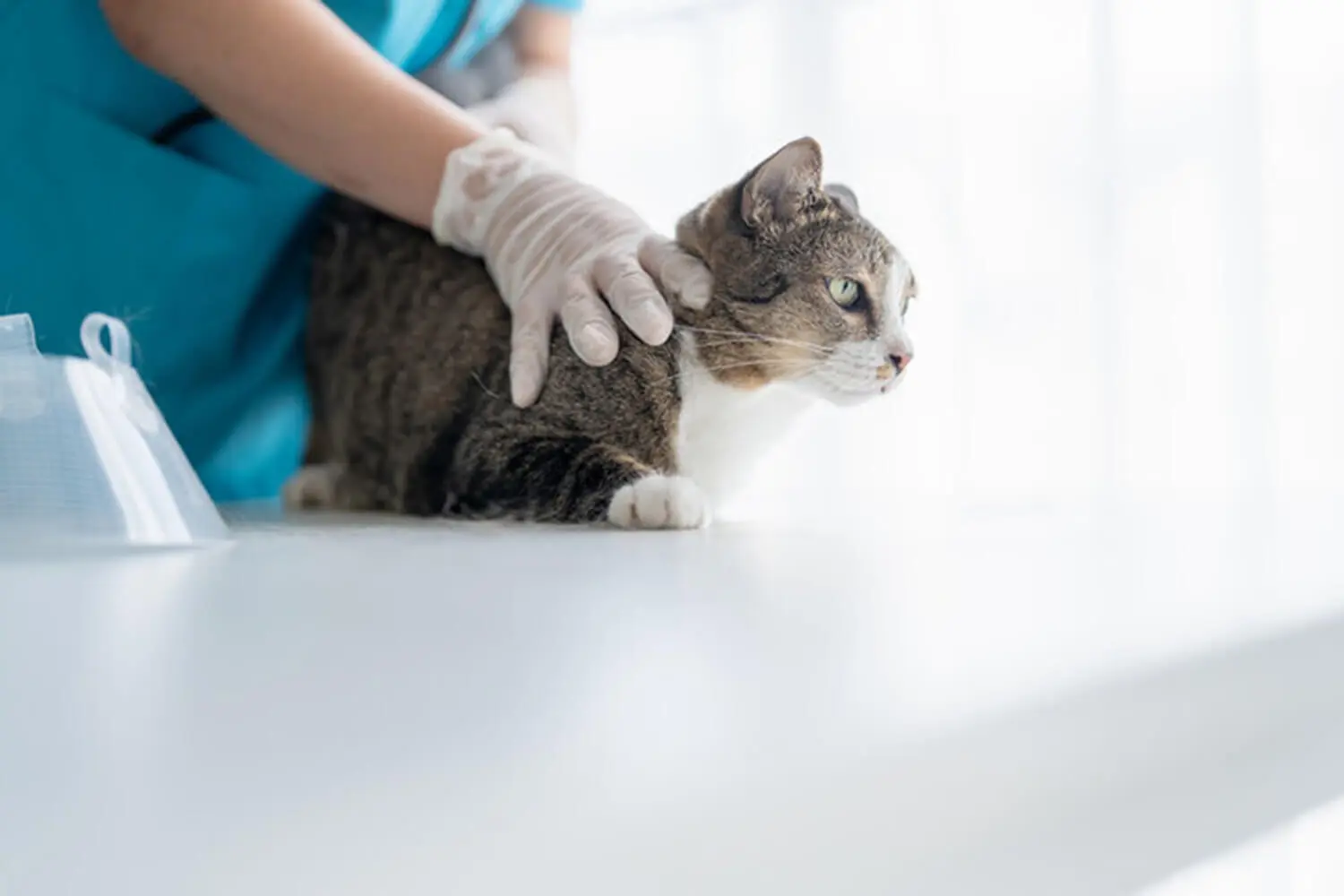
If you’ve noticed your male cat making repeated trips to the litter box without producing urine, or straining and vocalizing while trying to go, you may be watching a medical emergency unfold in real time. A urinary blockage is one of the most serious conditions a cat can face, and in male cats, it’s more common than many owners realize.
If you’re here because something looks off right now, the most important thing you’ll read in this entire blog is this: don’t wait. Scroll down to find out what to do immediately.
If you’re here to learn the warning signs before anything happens, you’re in exactly the right place. This blog covers the signs of a urinary blockage in male cats, why this condition happens, how quickly it escalates, what to do depending on what time it is, what treatment looks like, and what you can do to lower the risk going forward.
Is a Blocked Cat an Emergency?
Yes. A urinary blockage in a male cat is a life-threatening emergency that requires veterinary care right away, not tomorrow morning and not after a wait-and-see period at home.
A blocked cat can deteriorate and die within 24 to 48 hours without treatment. The condition will not resolve on its own under any circumstances. No amount of water, rest, or home remedies will clear a urinary blockage once it has formed.
One of the most dangerous mistakes owners make is assuming their cat is constipated. The litter box behavior looks similar at first glance, straining, repeated trips, nothing coming out, and it’s easy to assume the problem is digestive rather than urinary. That misread leads to waiting rather than acting, and waiting is what turns a treatable emergency into a fatal one.
If you think your cat might be blocked, treat it as an emergency and act immediately.
What Are the Signs of a Urinary Blockage in Male Cats?
The signs your male cat has a urinary blockage include:
- Straining to urinate with little or no urine produced — this is the defining sign
- Frequent trips to the litter box with no success
- Crying, yowling, or vocalizing in or near the litter box
- Restlessness, pacing, or hiding
- Vomiting, loss of appetite, or sudden lethargy
Each of these signs reflects what is happening inside your cat’s body. The straining is your cat attempting to force urine past an obstruction it cannot clear on its own. The vocalizing is pain. The vomiting and sudden lethargy signal that toxins are already beginning to build up in the bloodstream as the kidneys lose their ability to filter waste.
Individually, some of these signs can look like minor issues. A cat hiding. Vomiting once. Extra litter box trips. But the combination of these signs, especially when paired with little or no urine output, is the signal that this is not a routine stomach upset or behavioral quirk.
If you notice even one or two of these signs together, particularly straining with no urine, don’t wait for more signs to appear. Act now.
Why Are Male Cats Prone to Urinary Blockages?
Male cats have a significantly longer and narrower urethra than female cats, which makes it far easier for material to become lodged and block the flow of urine entirely.
The urethra is the tube that carries urine from the bladder out of the body. In male cats, this tube narrows considerably near the tip, creating a natural choke point where plugs of mucus, crystals, or small stones can get stuck. Female cats have a shorter, wider urethra that allows the same material to pass through much more easily.
Neutered male cats are especially susceptible. The narrowing of the urethra is even more pronounced after neutering, which is why urinary blockages are most commonly seen in neutered males specifically. If your cat fits that description, this is a condition worth knowing well.
Anatomy is the root cause, which means any male cat — indoor or outdoor, young or old — carries this risk. Awareness of the signs is the most important protection you can give him.
Why Does a Urinary Blockage Get Dangerous So Quickly?
When urine can’t exit the body, toxins and electrolytes that the kidneys would normally filter out begin building up in the bloodstream rapidly, affecting multiple organ systems within hours.
Here’s what the timeline actually looks like:
- Within hours: The bladder becomes painfully distended and the kidneys begin losing their ability to filter waste products from the blood
- Within 24 to 48 hours: Potassium levels in the blood can reach dangerous levels, a condition called hyperkalemia, which directly disrupts the heart’s electrical system and can cause fatal cardiac arrhythmias — a blocked cat can die suddenly even in a case that seemed manageable just hours earlier
- Beyond 48 hours: The risk of permanent kidney damage, bladder rupture, and death increases dramatically
The kidneys stop filtering waste, toxins accumulate, and acute kidney failure becomes a real risk if treatment is delayed even by a matter of hours. This rapid escalation is why the window for a good outcome is measured in hours, not days, and why any delay in seeking care meaningfully changes what’s possible for your cat.
What Should You Do Right Now?
The action you need to take depends on what time it is:
- During business hours: Call your vet immediately and describe exactly what you’re seeing. Do not wait for a scheduled appointment. Describe the litter box behavior, any vocalizing, and how long it has been going on.
- After hours or on a weekend: Go directly to the nearest emergency veterinary hospital right now. Do not wait until your regular vet opens. Every hour matters.
Both paths lead to the same place: get your cat to a vet as fast as possible. A urinary blockage cannot wait for business hours, and any emergency vet has the equipment and training to treat a blocked cat. Getting to care quickly matters far more than getting to any specific clinic.
Many owners hesitate because they aren’t sure whether what they’re seeing is serious enough to justify an emergency visit. Apply this rule: if your male cat is straining with no urine, that is serious enough. You will not be wasting anyone’s time. The cost of waiting is far greater than the cost of going in and being told it’s something less serious.
The sooner a blocked cat receives veterinary care, the better the prognosis and the lower the risk of permanent organ damage.
What Does Treatment for a Blocked Cat Involve?
Treatment for a urinary blockage involves relieving the obstruction, removing toxins from the body, and stabilizing the cat. It is effective when reached in time, and most cats who get there quickly go on to recover fully.
Here’s what to expect:
- Your cat will be sedated and a urinary catheter will be placed to drain the bladder and relieve the obstruction
- IV fluids are started immediately to flush toxins from the body and support the kidneys
- The catheter typically stays in place for one to several days while the urethra recovers and urine flow is monitored
- During that time your cat will be on pain medication and the vet team will be tracking kidney values, electrolyte levels, and overall stability
Most blocked cats require a few days of in-hospital care. This is normal, expected, and a sign that your cat is getting the close monitoring it needs, not that something has gone wrong. During those days the vet team is watching your cat around the clock, which means your cat is in the safest possible place while its body recovers. Those days are hard for owners, but no news during that window is typically good news.
Once the blockage is cleared and your cat is urinating on its own, most cats go home within a few days. Your vet will likely recommend some changes to diet and hydration habits to lower the risk of a recurrence.
How Can You Lower Your Cat’s Risk of Another Blockage?
Cats who have had one blockage are at higher risk for another, which makes these habits more important after a first episode, not less. None of them guarantee the condition won’t recur, but they address the most controllable risk factors — dehydration, crystal formation, stress, and weight — that make a blockage more likely:
- Encourage water intake — wet food, water fountains, and multiple water bowls throughout the home all help. Dilute urine is far less likely to form the crystals and plugs that cause blockages.
- Keep the litter box clean and stress levels low — stress is a documented trigger for feline lower urinary tract disease, and a dirty or inaccessible litter box is a direct stressor. A clean, accessible box in a quiet location matters more than most owners realize.
- Maintain a healthy weight and schedule regular checkups — obesity increases risk, and routine wellness exams catch early urinary changes before they escalate into emergencies.
- Feed a high-quality diet appropriate for your cat’s life stage — your vet may recommend a urinary-specific prescription diet if your cat has already experienced a blockage.
Building these habits into your cat’s daily routine is the most practical thing you can do as an owner to protect him going forward.
Acting Fast Is What Protects Your Cat
Urinary blockages in male cats are serious, but they are treatable when reached in time. The outcome depends almost entirely on how quickly the cat gets to care.
You know your cat better than anyone. If something doesn’t look right in the litter box, trust that instinct. Don’t wait for the signs to get worse before deciding to act.
If your male cat is showing any of these signs right now, call us immediately during our business hours and we’ll get you in as fast as possible. If we’re not open when you need us, please do not wait for us to open. Go to your nearest emergency veterinary hospital now. Every hour matters with this condition, and any emergency vet can help your cat tonight.
Your cat is counting on you to act fast. We’re here to help when we can, and we want you to know exactly where to go when we can’t be.