

Why Senior Pets Need Screening Before Symptoms Appear
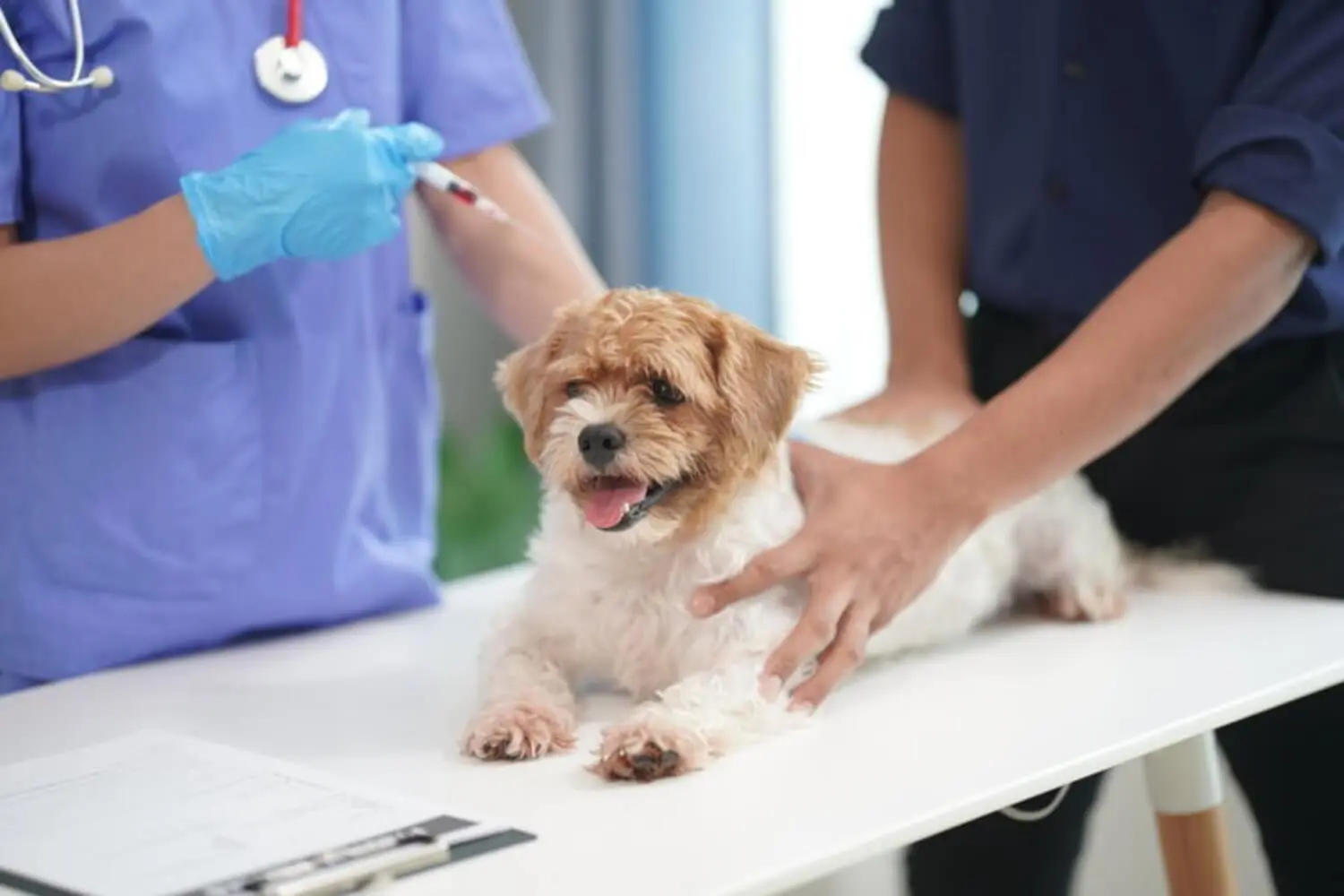
If your dog or cat is getting older but still seems healthy, it’s easy to assume everything is fine. For younger pets, that assumption usually holds up. Senior pets are different. The same instincts that helped their ancestors survive in the wild cause them to mask pain and discomfort, even from the people who know them best. A pet can look completely normal while something develops quietly inside.
Understanding why senior pets need screening before symptoms appear, and what that screening actually involves, helps you make a more informed decision about your pet’s care as they age.
Why Senior Pets Don’t Always Show When Something Is Wrong
Pets hide discomfort. Cats do this especially well. This isn’t stubbornness or mystery — it’s a survival instinct. In the wild, showing weakness invites predators. Domestic pets retain that instinct even though the stakes are very different at home.
In practice, a cat with early kidney disease may eat, drink, and interact normally for months before any visible sign appears. A dog with arthritis may simply slow down a little. Owners often read that as normal aging rather than a signal that something is developing.
The problem with using behavior as a health indicator is that it works reasonably well for sudden problems. A pet in real distress usually shows it. But slow, progressive conditions — the kind most common in senior animals — often produce no visible signs until they are already well advanced. A pet can be playful, eating well, and seemingly content while carrying a condition that has been progressing for months. By the time that condition surfaces visibly, the window for early intervention has often already closed. The options for treatment narrow as disease advances, which is exactly why waiting for signs is a riskier strategy in senior pets than most owners realize.
What a Physical Exam Can and Can’t Tell You
A physical exam is essential. It catches a great deal. But it has real limits, and understanding those limits is what makes the case for imaging so straightforward.
A vet examining a senior pet can assess body condition, listen to the heart and lungs, feel the abdomen, check lymph nodes, and evaluate pain response. All of that matters and provides important baseline information. But many conditions common in older pets develop internally in ways a hands-on exam cannot reliably detect.
A mass developing inside an organ. Early changes in heart size. Bladder stones. The beginning of arthritis in a deep joint. None of these may be apparent to touch alone. A vet can feel a distended abdomen but not always the mass causing it. A heart murmur might be detectable by stethoscope, but early heart enlargement often requires imaging to confirm. A normal exam result doesn’t mean nothing is developing — it means nothing was detectable at the surface in that moment.
That distinction matters more in senior pets than in any other life stage. A young, healthy pet with a clean exam is almost certainly fine. A senior pet with a clean exam may still have something developing internally that a physical exam simply cannot reach. Imaging fills that gap — and it’s the core reason diagnostic imaging adds genuine value to a senior wellness visit rather than duplicating what an exam already covers.
What X-Rays Reveal in Senior Pets
X-rays give the vet a clear view of internal structures that no physical exam can reach. Many findings on a senior screening X-ray are completely invisible from the outside.
Here is what X-rays can show:
- Masses or tumors in the chest or abdomen
- Heart size and shape, including early enlargement
- Lung changes that may indicate fluid, infection, or other issues
- Arthritis and bone changes, including joint deterioration
- Abdominal organ size and position
- Bladder stones
Many owners assume X-rays are only necessary when something is obviously wrong. In senior pets, routine screening X-rays often reveal findings that would not have surfaced until symptoms appeared — at which point treatment options are typically narrower. A bladder stone found on a routine image is manageable. The same stone found after a pet develops repeated urinary infections or a blockage is a very different situation.
Finding early heart enlargement on a routine image gives the vet and owner time to discuss monitoring and management before the heart is under serious strain. That window is what early detection actually opens. It’s not just about finding problems — it’s about finding them at a stage where something can still be done.
What Ultrasound Adds to the Picture
Ultrasound evaluates organs in real time. It gives the vet a dynamic view of how structures look and function — something X-rays alone cannot provide.
Where X-rays show size and position, ultrasound shows what is happening inside. It examines the liver, kidneys, spleen, and bladder directly. It detects fluid accumulation, masses, or abnormalities within those organs. When something appears, the vet immediately has information to guide the next step, whether that means monitoring, further testing, or treatment.
Ultrasound and X-rays are not either-or tools. They answer different questions. A dog with an enlarged spleen visible on X-ray might need ultrasound to determine whether the enlargement is uniform or whether a mass is present within it. A cat with subtle kidney changes might show nothing unusual on X-ray but reveal significant internal changes on ultrasound. Together, the two tools give the vet a much more complete picture than either provides alone. That combination is what makes a senior screening genuinely comprehensive rather than a surface-level check.
Why a Radiologist Reviews the Images
Taking the images is only part of the process. At SJB, a board-certified radiologist reviews the results rather than relying solely on an in-the-moment reading.
A board-certified radiologist spends their career interpreting veterinary diagnostic images. They train specifically to identify subtle or early changes that a generalist may not catch in a standard clinical setting. A slight irregularity in organ shape. An early change in bone density. A small mass in a location that is easy to overlook on a first read. These are exactly the kinds of findings that a specialist review is designed to catch.
Many owners assume the attending vet’s reading of an X-ray or ultrasound is the complete picture. Specialist review goes further. It is the difference between capturing the images and truly understanding everything they show. Subtle findings caught at an early stage are more likely to be identified and acted on — which directly changes what is possible for your pet going forward.
When Is a Pet Considered Senior?
Most dogs and cats reach senior status around age 7, though the threshold varies by species and size.
Large and giant breed dogs age faster than small breeds. A Great Dane at 7 is significantly further along in the aging process than a Chihuahua at the same age. Cats generally follow a more consistent timeline, with 7 serving as a widely used benchmark for when senior-focused care becomes a priority.
The more useful framing isn’t that 7 is when a pet becomes “old.” It’s that 7 is when the risk of age-related disease begins to increase meaningfully. Proactive screening carries the most value precisely at this stage — before visible changes begin — because that is when the widest range of options still exists. Waiting until 9 or 10 to start screening doesn’t make it less valuable, but it does mean more time has passed during which something could have been caught and addressed earlier.
Which Pets Benefit Most From Proactive Screening?
Senior screening fits any dog or cat around age 7 or older, but some situations make the case for acting now especially strong:
- Pets 7 years and older, regardless of how healthy they appear on the surface
- Pets showing subtle changes like slowing down, sleeping more, or mild shifts in appetite — signs easy to attribute to normal aging but worth investigating
- Breeds predisposed to specific conditions, such as those prone to heart disease, kidney disease, or joint problems, where early detection carries particularly high value
- Owners who want a complete internal picture rather than an assumption based on behavior alone
Proactive screening isn’t only for pets that seem unwell. It’s for owners who want to stay ahead of what aging can bring rather than respond to it after it has already advanced. It fits naturally into the routine preventative care that keeps your pet healthy at every stage of life — not as something separate or alarming, but as the next logical step as your pet gets older.
Is Screening Worth It Before Symptoms Appear?
The case for screening comes down to what waiting typically costs compared to what early action makes possible.
Waiting for symptoms often means:
- More advanced disease by the time something is found
- Fewer treatment options
- More stress for the pet and the owner
- Higher overall cost
Screening offers:
- Time to act before a condition progresses
- More options for management or treatment
- Better outcomes
- Peace of mind when everything looks good
That last point matters. Screening doesn’t always find something — and when it doesn’t, that result is itself valuable. A clean screening gives an owner genuine confidence that their pet is healthy internally. That confidence is worth something too. It replaces the quiet uncertainty that comes with not knowing.
What Early Detection Actually Gives You
Early detection means time, options, and better odds. Conditions caught early are typically simpler to treat, less invasive to manage, and more likely to respond well than those found after they progress. Your vet has more room to act, more tools available, and more time to monitor before a condition reaches a critical point.
If your dog or cat is 7 or older and appears healthy, that is actually the best time to look. Not because something is necessarily wrong. Because finding something early is when it matters most — when the most options are still on the table and the path forward is still wide open.
If you want to get ahead of what aging can bring, we are ready to help. Schedule a wellness visit and we will walk you through what senior screening involves, what we look for, and what the results can tell you about your pet’s health today and in the years ahead.